Distinguishing Between Noble and Malignant Patinas
In metal conservation, not all green surfaces are equal. When copper in bronze oxidizes gradually in temperate air, it forms a dense, tightly adhering layer of cuprous oxide (cuprite, reddish-brown), overlaid by basic copper sulfates such as brochantite and antlerite (soft velvet greens). This is known traditionally as the "noble patina." It passivates the metal surface, dramatically slowing down subsequent corrosion rates.
Conversely, "malignant patina" or active bronze disease occurs when airborne chlorides from sea spray or de-icing agents penetrate cracks in the oxide layer. Chloride reactions produce cuprous chloride, which rapidly oxidizes in the presence of moisture and ambient oxygen to generate atacamite and paratacamite. This reaction continuously regenerates hydrochloric acid, eating deep pits into the cast bronze.
The Problem With Synthetic Clear Coats and Lacquers
During the 1970s and 1980s, outdoor bronze sculptures were frequently sprayed with synthetic acrylic resins or polyurethane clear coats (such as Incralac). While these coatings initially looked crisp, outdoor exposure inevitably caused UV degradation.
Within 5 to 10 years, sunshine causes acrylic coats to yellow, micro-craze, and turn brittle. Moisture then slips behind the micro-fractures, trapping water directly against the raw metal. Corrosion continues unseen beneath the cloudy lacquer film, producing patchy black and pale green blotches that cannot be remedied without fully stripping the failed resin with toxic aromatic solvents.
Protective Systems Compared
| Protective Barrier | Reversibility | Visual Impact | Maintenance Cycle |
|---|---|---|---|
| Microcrystalline Wax (Multi-layer) | 100% Reversible with white spirit without substrate harm. | Satin finish, enriches natural bronze depth without unnatural gloss. | Annual or biennial buffing and localized touch-up. |
| Hot Waxing (Thermic Application) | Fully reversible; deep penetration into casting micro-pores. | Smooth, water-repellent, highly uniform surface. | 3 to 5 years depending on rain exposure. |
| Acrylic Resin Lacquers (e.g. Incralac) | Difficult to reverse once aged; requires strong solvent baths. | High initial gloss that degrades into cloudy, yellowed patches. | Requires complete stripping every 7 to 10 years. |
| Linseed Oil / Boiled Oils (Historical) | Partially reversible; polymerizes into dark, tacky residue. | Dries dark; attracts dust and soot particulates rapidly. | Obsolete in modern heritage practice. |
The Contemporary Waxing Protocol
Modern international conservation practice widely favors high-melting-point microcrystalline wax blends (often formulated with polyethylene wax modifiers) for outdoor bronze protection. Our studio applies these systems through controlled methods:
- Substrate Preparation: Thorough dry cleaning and gentle solvent swab removal of grease and loose particulates, ensuring the underlying patina is chemically stable.
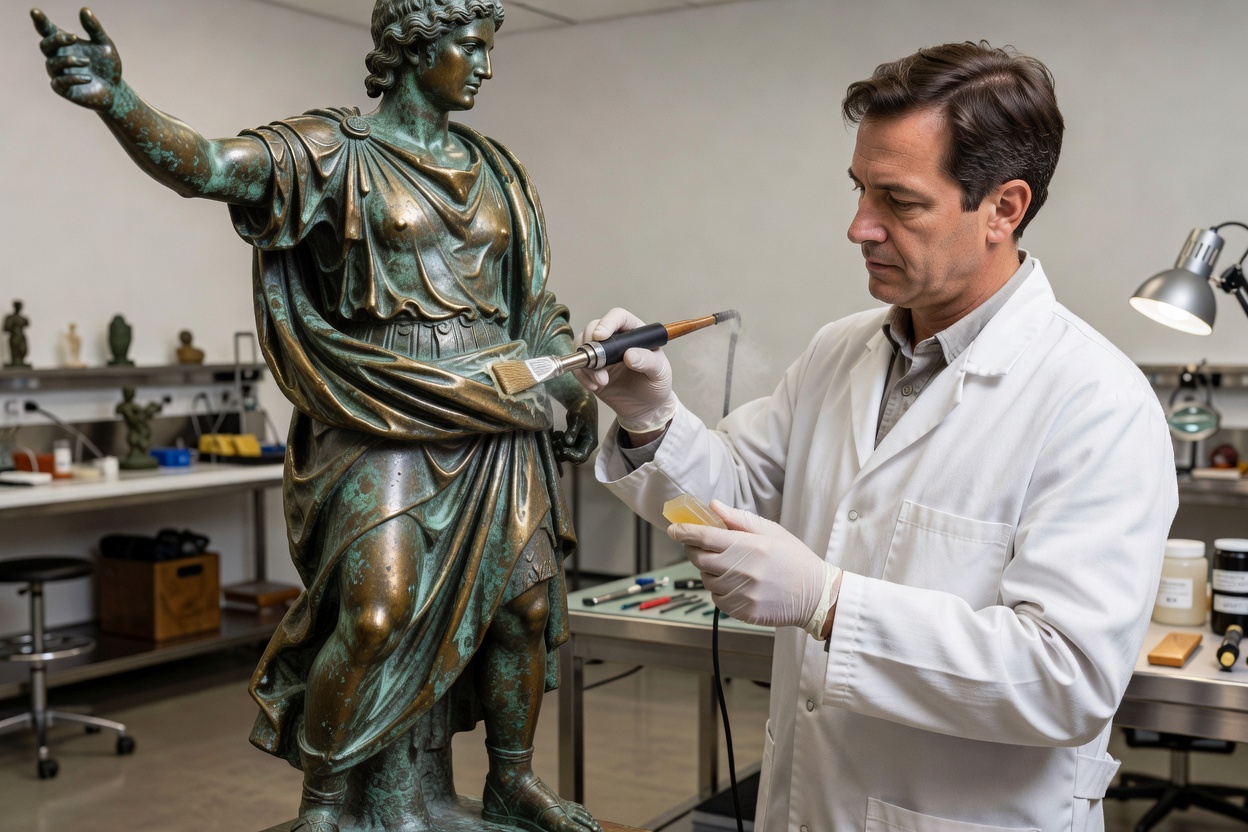
- Thermal "Hot" Application (First Pass): Gently warming the bronze surface with a soft, diffused propane flame or indirect hot-air generator to drive out surface humidity. A hard microcrystalline wax is then brushed onto the warm metal, allowing it to penetrate deeply into microscopic casting pores and undercut recesses.
- Cold Paste Application (Second Pass): Applying a softer, paste wax formula once the metal cools, creating a flexible, sacrificial surface envelope.
- Manual Buffing: Polishing the cured wax layer with soft horsehair brushes and lint-free cotton cloths to produce a breathable, water-shedding satin sheen that does not glare under daylight.
Ethical Considerations: Should a Stripped Bronze Be Re-Patinated?
When a statue has been severely damaged by fire, abrasive vandalism, or harsh historic cleaning, conservators are faced with raw metal. In such cases, localized chemical patination (using gentle sulfurated potash or nitrate washes) may be conducted to tone distracting bright spots into harmony with surviving areas. However, full artificial re-patination of an entire monument should only be undertaken after multidisciplinary consultation, as it permanently obscures historical evidence.
Advantages of Regular Wax Care
- Prevents direct contact between rain and reactive copper
- Creates a sacrificial layer that absorbs bird droppings
- Makes future removal of surface dirt exceptionally gentle
- Can be refreshed locally without stripping the entire sculpture
Field Indicators Requiring Attention
- Water droplets no longer beading on exposed bronze limbs
- Formation of powdery, pale-green deposits in joints
- Whitish cloudy streaks appearing after rainstorms
- Uneven dark carbon encrustations along undercuts